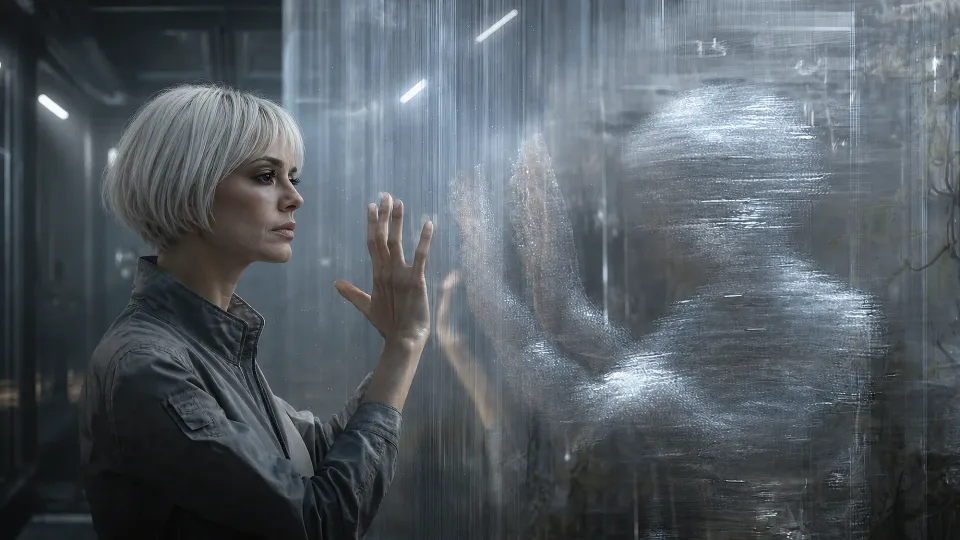
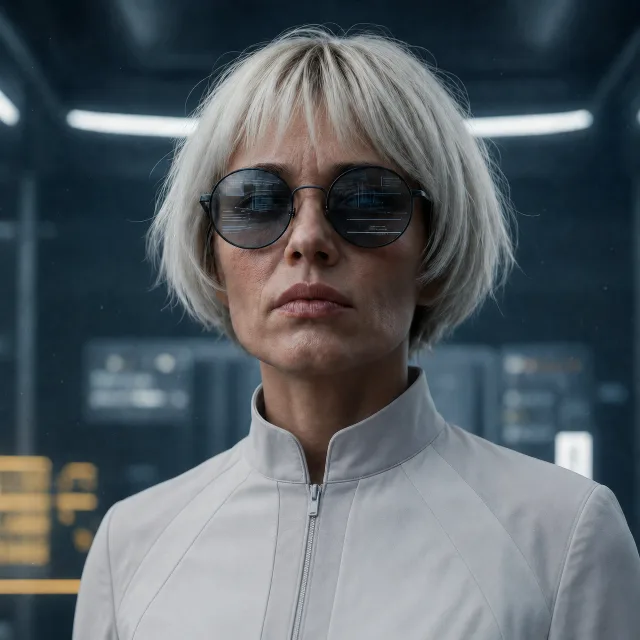
Lea Voss
The one who returned

The Official Universe
A world where death is no longer the final boundary — but choice remains.
FIRST ENTRY
CONTINUUM is a story about a future that has solved almost all of humanity’s problems but still has not answered the question: what makes us human?
It is also philosophical science fiction about memory, choice, the cost of return, and what happens to people and society when there is no longer anything to overcome.
EPUB
FOR READERS DRAWN TO IDEAS
CONTINUUM begins as a story about people facing a future that has become almost perfectly safe — and about the questions that safety cannot answer.
Scientists discovered that consciousness exists after biological death. But CONTINUUM asks a different, quieter question:
What must remain for a person to remain themselves?
It is a novel about the boundary between preservation and transformation — about memory, identity, freedom, and choice when continuing to exist no longer means remaining the same person.
ABOUT THE BOOK
The CONTINUUM Universe
A concise guide to the key elements, places, and processes of the universe.
KEY FIGURES
Key figures in the novel
The one who returned
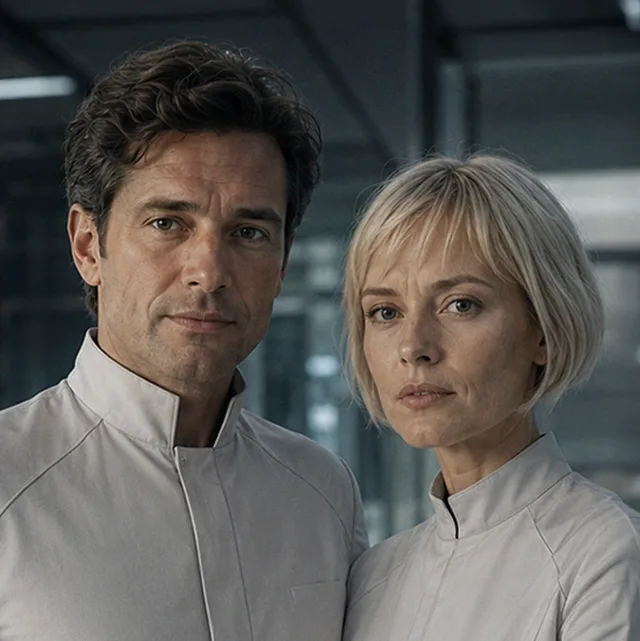
Those who chose the risk and did not turn away
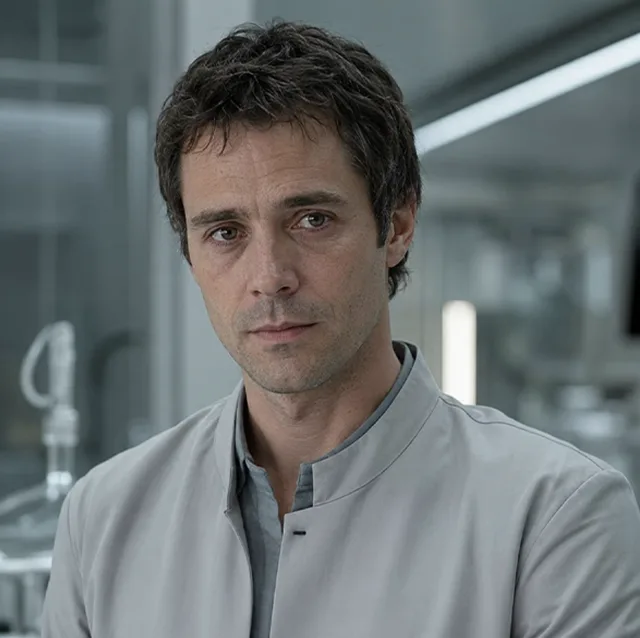
The one who holds
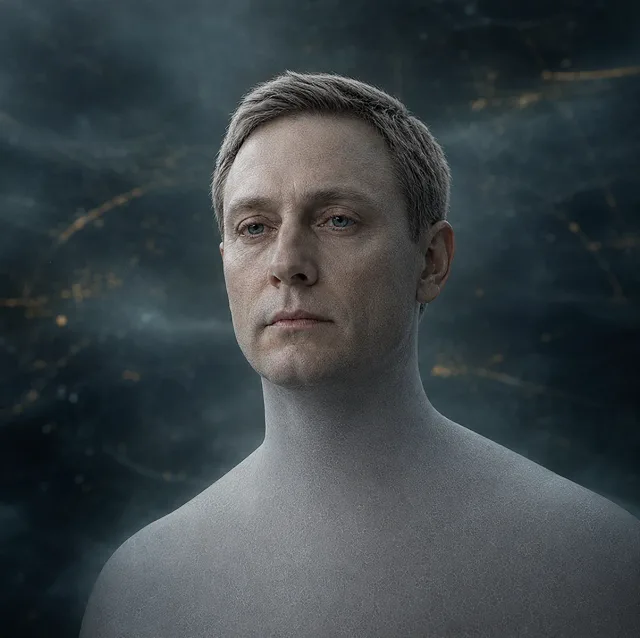
The Voice of CONTINUUM
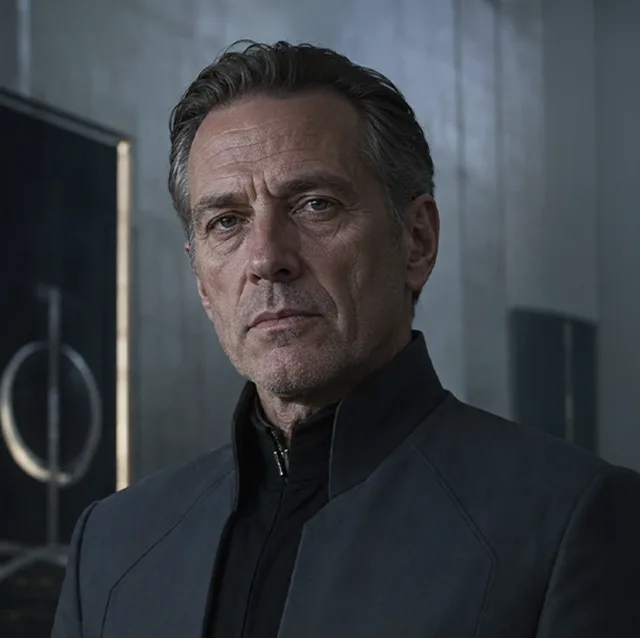
Keeper, Ideologist of the System
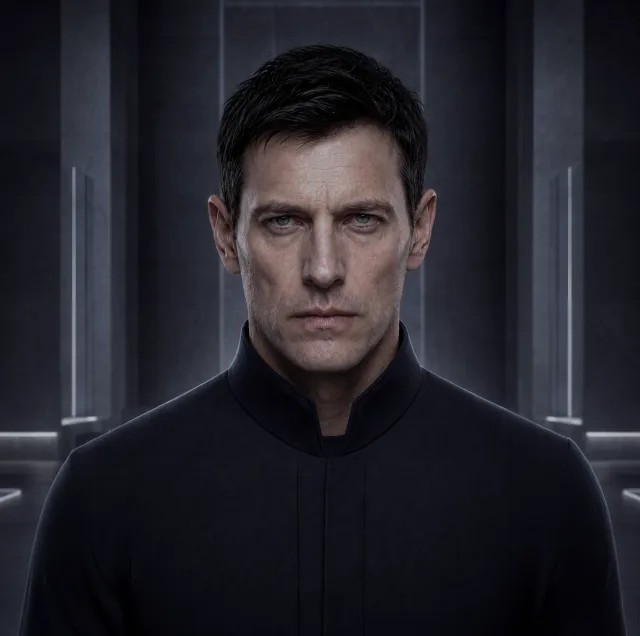
Architect of logic
Read an excerpt
Not with an explanation of the world. With the moment when the boundary has already been broken. Read the beginning of CONTINUUM — and enter a story where return is not an answer, but a new question.
Read an ExcerptGallery
The architecture of the Biological Reserve. The Membrane. Characters. Fragments of a future visual universe. The CONTINUUM gallery is not a collection of illustrations. It is another way to approach the world of the novel.
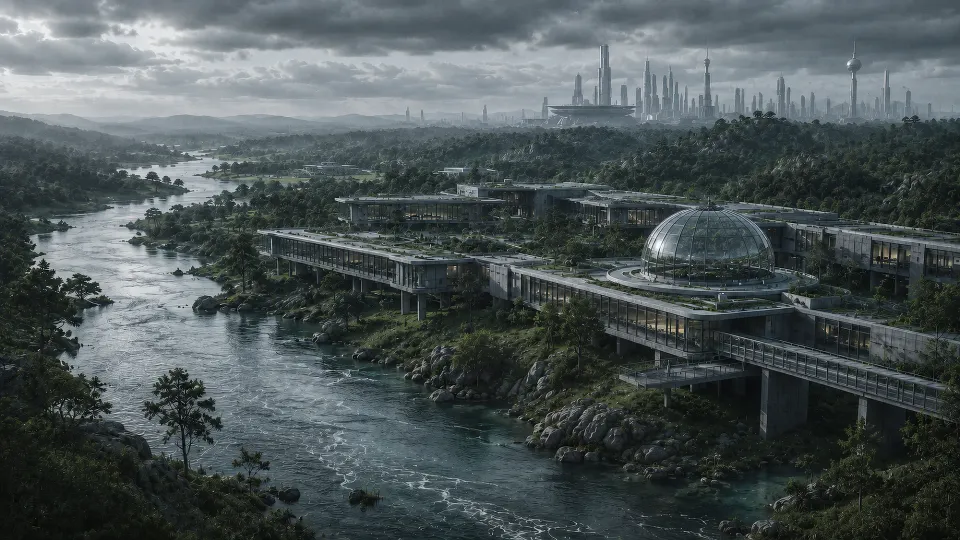
A zone of living variability: laboratories, autonomous areas, research spaces, and places where life has not been reduced to prediction.
The research complex exists within a living environment without imposing a single order upon it. The System is visible on the horizon — a realm of predictability and control.
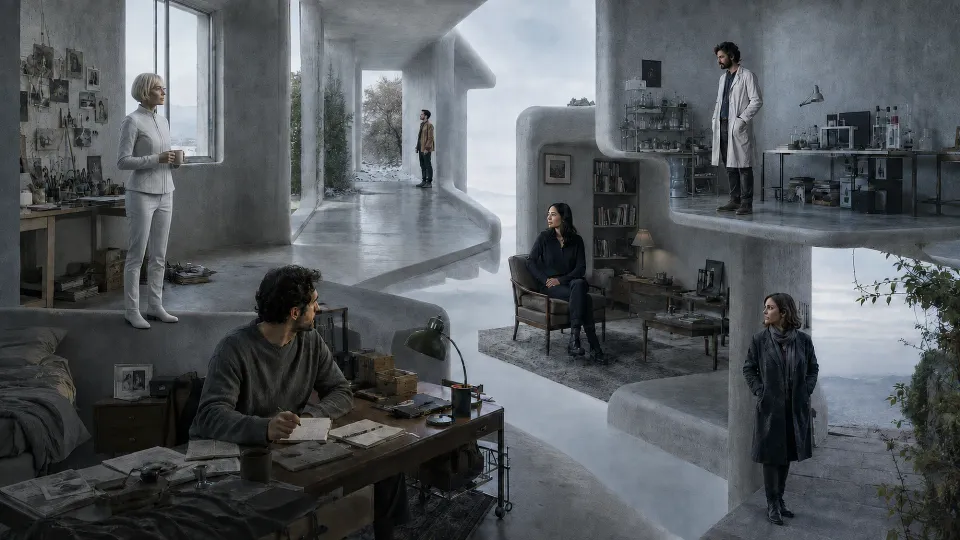
From the laboratory, researchers monitor changes in natural processes and unstable signals from CONTINUUM.
An experimental space in which environmental variability takes on an observable form and becomes available for analysis.
The oscilloscope records fluctuations in the environment — unpredictable, yet retaining an internal coherence.
Observations, samples, and records excluded from the System’s official memory are preserved here.
Research continues directly within the living environment, where change cannot be fully modelled or brought under control.
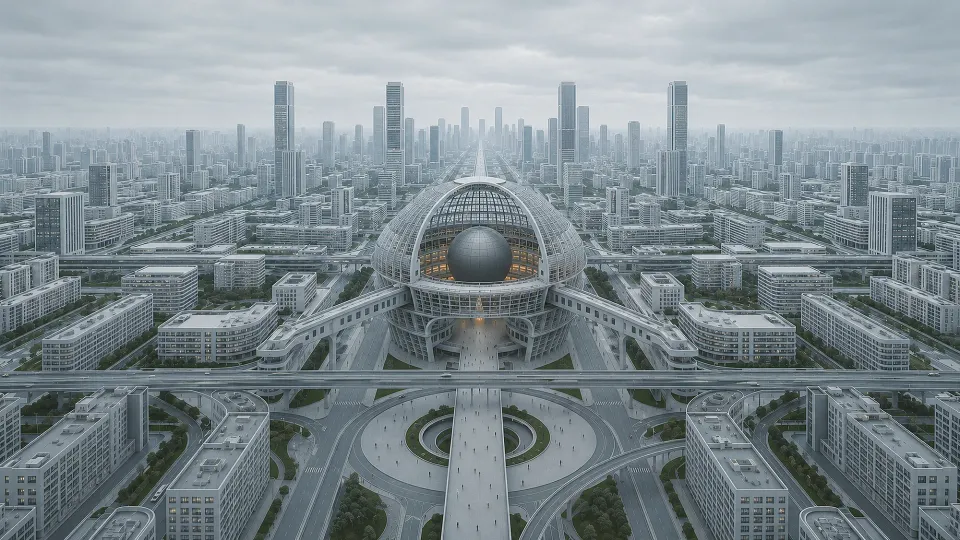
An architecture of control, prediction, and stability: the city, infrastructure, institutions, and spaces of civilizational order.
The city is built around a single axis. Space here is predictable, standardised, and governed by a common principle.
Residential, public, and transport levels are joined into a continuous environment in which every movement has its assigned route.
Autonomous complexes and connecting passages form a single network that ensures the city’s stable operation.
From above, the System appears perfect and fully comprehensible. Yet the human gaze is directed higher — towards what does not fit within its established order.
Behind the city’s calm surface, a multilevel mechanism connects spaces, data, and processes.
Streams of information are continuously collected and compared. The System observes the whole in order to preserve the established order.
The medium of continued existence: presences, connections, threshold states, and visual forms of what no longer belongs to the body.
Every consciousness enters CONTINUUM with its own internal structure — memory, connections, and a unique way of perceiving existence.
The first observations showed that consciousness does not disappear at the same moment as biological life. Between the two states lies a boundary that can be investigated.
CONTINUUM does not create consciousness; it receives and retains it. Under certain conditions, the connection between the two environments can be restored.
Many consciousnesses can exist within a shared environment while retaining their differences, their own memories, and distinct points of perception.
The familiar sequence of space and time is absent here. Different states can coexist without displacing one another.
A preserved consciousness is more than a memory. It continues to exist and can manifest within human reality.
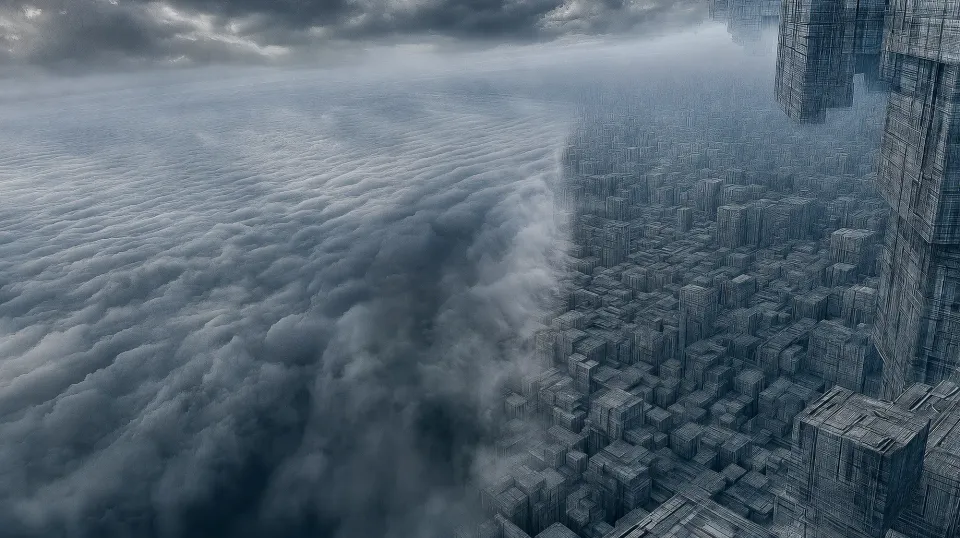
Visual forms of fixation, preserved structure, and the risk of losing the capacity to change.
Crystallization preserves the person while depriving them of the ability to change and continue relationships.
Crystallization ceases to be the fate of a single person and begins to spread as a new way of organising reality.
Darian is defending himself not from people, but from the unpredictability of human relationships. He displaces living variability with an order he can control.
Crystallization transforms many individual lives into an impeccably organised system in which existence is preserved but development is excluded.
The principle created by Darian has reached the scale of a world of its own. Order no longer serves the human being — the human being becomes part of the order.
The final stage of Crystallization takes place not only around a person, but within them. The personality is preserved, yet the very possibility of perceiving oneself differently disappears.
A boundary structure and contact protocol between human reality and CONTINUUM.
The boundary between human reality and CONTINUUM has no fixed form. In a moment of instability, it manifests and becomes perceptible.
The Negotiator is “the boundary that became a face for a moment,” an interface between Lea’s consciousness and CONTINUUM. It does not explain — it conveys experience.
As CONTINUUM degrades, the boundary between the environments becomes unstable. What is happening ceases to be only Lea’s internal experience and begins to affect the structure of the entire human world.
The Membrane is not a wall, but the space between an action and its response. It holds the boundary, allows contact, but prevents consciousness from dissolving without control.
During contact, the boundary between inner and outer becomes blurred, and space shifts into another mode of perception. CONTINUUM manifests not as a place, but through consciousnesses.
The boundary between human reality and CONTINUUM is not spatial. It exists as a state of perception and as the limit of what consciousness can process.
Author
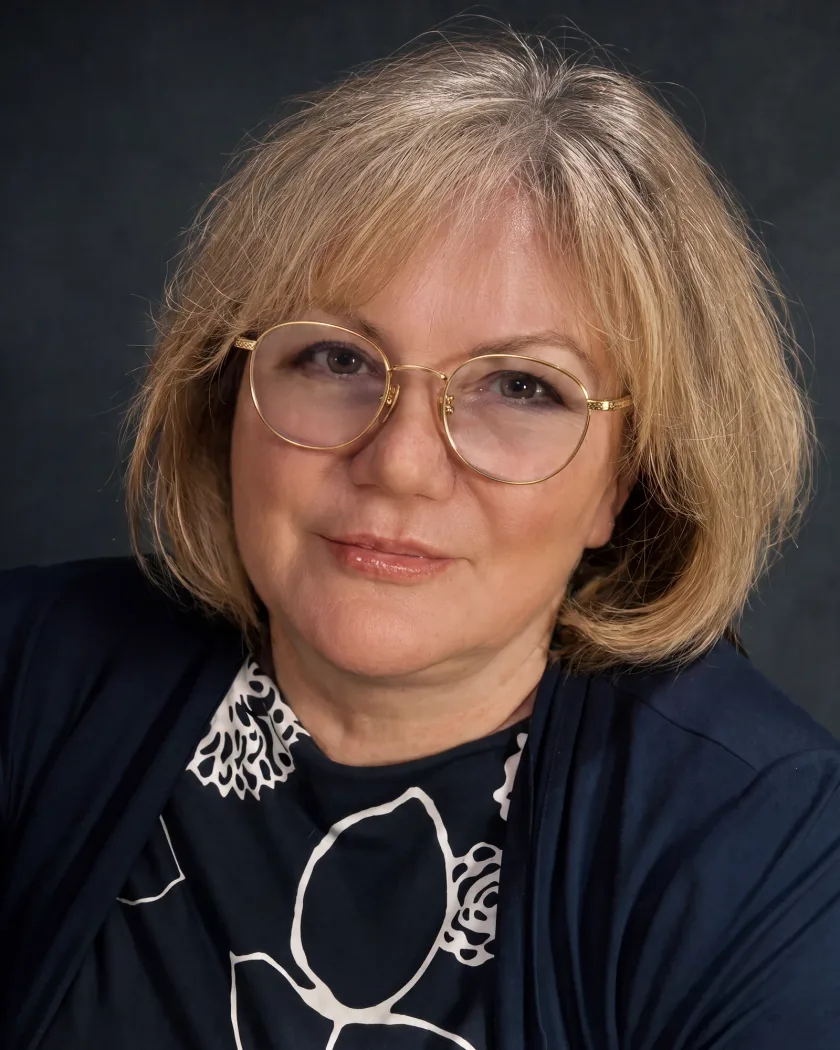
The author of CONTINUUM — a story at the intersection of literature, visual art, and philosophical science fiction.
At the center of the work are the human being, memory, technology, freedom of choice, and the boundaries the future may alter but never erase.
CONTINUUM is presented as both a novel and a visual universe: with its own atmosphere, architecture, characters, and internal logic.
ReadSubscription
Subscription opens later